🧠 How to Reduce Hair Loss During Cancer Treatment? Complete Practical Guide by Dr. Bharat Patodiya
- cancer care by Dr bharat Patodiya
- Apr 11
- 3 min read

Updated: Apr 18

Hair loss during cancer treatment is one of the most feared side effects, often more distressing than the treatment itself.
Many patients ask:
“Will I lose all my hair?”
“Will it come back?”
“Can I prevent it?”
This guide answers these questions practically and honestly, based on real patient experiences.
🔎 TL;DR (Quick Summary)
Hair loss during cancer treatment is temporary in ~95% patients
It usually starts around day 20 and peaks by 3 months
It happens because chemotherapy damages hair roots
Some drugs cause hair loss, some don’t
Scalp cooling devices can reduce hair loss significantly
Eyebrows and eyelashes also need attention (often ignored)
Prevention and correct technique matter more than late treatment
👉 Dr. Bharat Patodia offers chemotherapy support guidance + scalp cooling + cosmetic solutions to help patients manage this phase confidently.
❓ What Is Hair Loss During Cancer Treatment?
(Chemotherapy-induced alopecia)
Hair loss during cancer treatment is different from normal hair fall.
🔹 Normal Hair Loss:
Due to nutrition or hormones
Gradual thinning
Eyebrows and eyelashes are usually spared
🔹 Cancer Treatment Hair Loss:
Sudden and rapid
Includes scalp, eyebrows, eyelashes
Caused by damage to hair roots by chemotherapy

⚠️ Why Does Hair Loss Happen in Chemotherapy?
Chemotherapy targets rapidly dividing cells.
Hair roots are among the fastest-growing cells →👉 They get “shut down” suddenly
This leads to:
Hair becoming weak
Hair falling out in clumps

⏳ When Does Hair Loss Start?
Usually begins around day 15–20 after first cycle
Peaks around 2–3 months
Not immediate (myth: hair falls from day 1 ❌)

💡 Myth vs Truth
❌ Myth:
Hair never comes back
✅ Truth:
Hair regrows in ~95% patients
Regrowth usually starts after treatment completion
Full recovery may take months to years

⚖️ Can Hair Loss Be Prevented?
✅ 1. Choosing the Right Chemotherapy
Some drugs:
Cause hair loss → Paclitaxel, Docetaxel, Adriamycin
Cause minimal hair loss → 5-FU, Capecitabine
👉 Always discuss with your oncologist if equally effective, less hair-loss options

❄️ 2. Scalp Cooling Devices (Most Effective Method)
Devices like UK-designed scalp cooling systems work by:
👉 Cooling scalp to very low temperatures👉 Causing vasoconstriction (reduced blood flow)👉 Less chemotherapy reaches hair roots
Result:👉 Reduced hair damage and hair fall

⚠️ Common Mistakes with Scalp Cooling (Very Important)
❌ Patient-side mistakes:
Not starting 30 minutes before chemotherapy
Removing early
Keeping long/thick hair (reduces cooling effect)
Applying oil → reduces effectiveness
Not shampooing properly
Expecting 100% hair preservation
❌ Hospital-side mistakes:
Late application
Early removal
Over-promising results
⚠️ Important Limitation:
For long half-life drugs (like gemcitabine):
Cooling for few hours may NOT prevent hair loss fully
👉 Expectation setting is critical

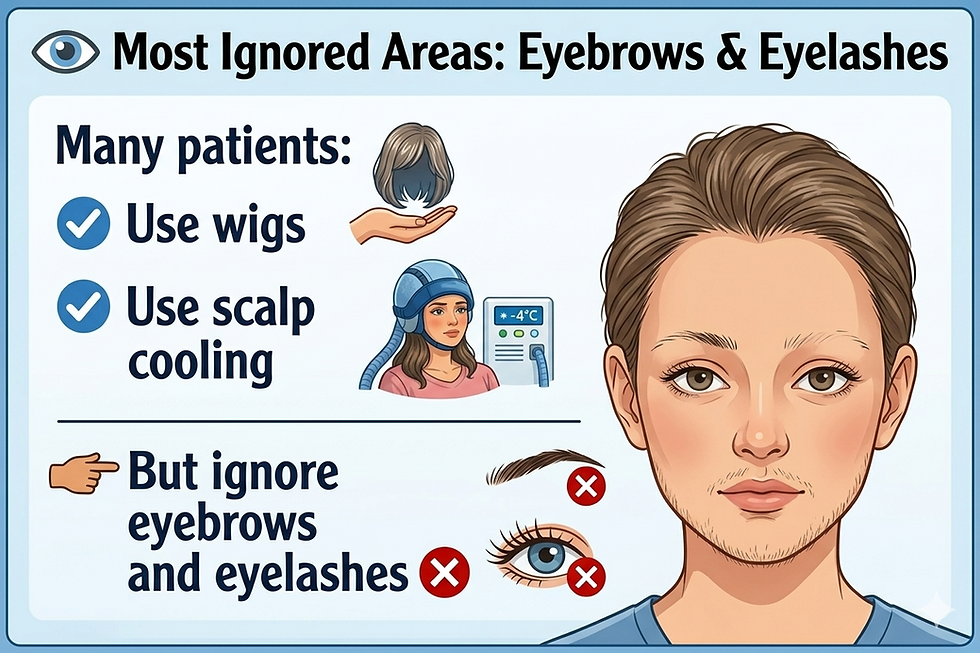
👁️ Most Ignored Areas: Eyebrows & Eyelashes
Many patients:
Use wigs ✔
Use scalp cooling ✔
👉 But ignore eyebrows and eyelashes ❌
✍️ Eyebrows
Common mistake:
Using pencil → looks artificial
Better option:
👉 Skin micropigmentation (semi-permanent)
Natural appearance
Lasts ~6 months
No daily effort
👉 Consult a certified dermatologist before procedure

👁️ Eyelashes
Often thin or fall out
Patients forget to manage
👉 Solution:
Artificial eyelashes
Safe cosmetic enhancement

🍽️ Lifestyle Tips to Reduce Hair Damage
Avoid tight hairstyles
Use mild shampoo
Avoid heat styling
Use satin pillow covers
Maintain balanced diet
Avoid sudden drastic diet changes

❗ What Patients Often Do Wrong
Delay preventive steps
Panic after hair fall starts
Stop medicines due to fear
Focus only on scalp, ignore face aesthetics

🚨 When Should You Consult a Doctor?
Excessive or unusual hair loss pattern
No regrowth after treatment
Scalp pain or infection
Psychological distress due to appearance

🧠 Doctor’s Insight (Dr. Bharat Patodiya)
Hair loss is temporary, but its emotional impact is real.
👉 The right approach is:
Prevention before it starts
Correct technique
Holistic support (medical + cosmetic)

💼 How We Help Patients
Under guidance of Dr. Bharat Patodiya, patients receive:
✔ Chemotherapy planning to reduce side effects
✔ Scalp cooling device guidance
✔ Access to advanced cooling systems
✔ Cosmetic support (eyebrows, eyelashes)
✔ Remote guidance for patients across India
👉 Many patients consult specifically to:
Understand hair loss risk
Prevent avoidable mistakes
Maintain confidence during treatment

🧾 Conclusion
Hair loss during cancer treatment is not permanent, but how you handle it makes a huge difference.
👉 With the right strategy:
You can reduce hair loss
Maintain appearance
Preserve confidence
👉 Don’t wait for hair fall to start, prevention works best.
❓ Frequently Asked Questions
Will all chemotherapy cause hair loss?
No. Some drugs cause severe hair loss, others minimal.
Will my hair grow back after chemotherapy?
Yes, in ~95% patients.
Does scalp cooling completely prevent hair loss?
No, but it can significantly reduce it.
What about eyebrows and eyelashes?
They also get affected and need separate management.
Can I consult remotely?
Yes. Dr. Bharat Patodia provides guidance for patients across India.


Comments