Integrated Pancreatic Cancer Treatment: Chemotherapy and Pain Management Under One Roof
- Ganesh Akunoori
- May 2
- 9 min read

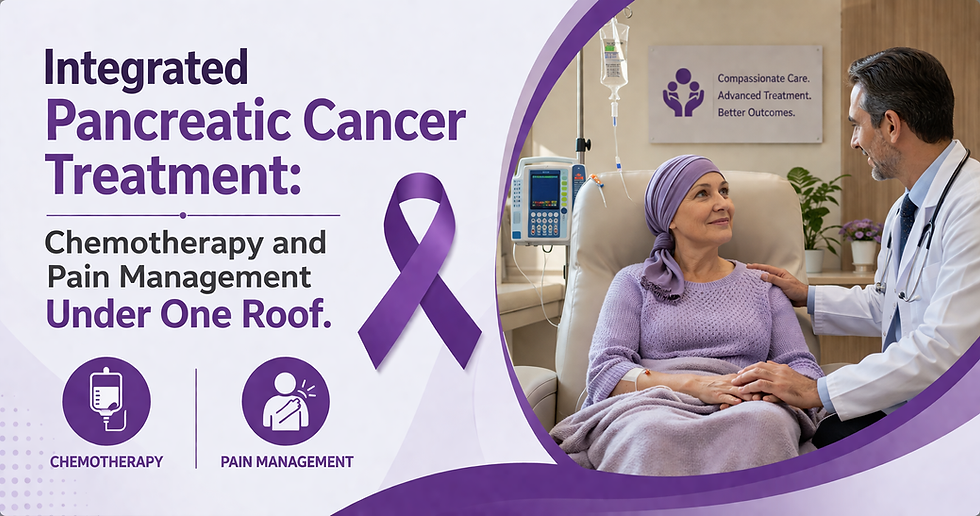
Pancreatic cancer patients face unique challenges requiring both aggressive treatment and comprehensive symptom control. Integrated cancer centers that combine chemotherapy with pain management eliminate the burden of navigating multiple facilities while ensuring coordinated, patient-centered care.
TL;DR
Pain affects 20-50% of all cancer patients, with roughly 80% of advanced-stage patients experiencing moderate to severe pain [3]
Pi Cancer Care by Dr.Bharat Patodiya delivers chemotherapy and pain management through coordinated multidisciplinary teams at a single Hyderabad location
Integrated care models reduce patient stress, improve treatment adherence, and enhance quality of life throughout pancreatic cancer treatment
More than 60% of Indian cancer cases are diagnosed at advanced stages, making simultaneous pain control essential [2]
Pi Cancer Care's palliative oncology specialists work alongside medical oncologists to optimize both tumor control and symptom relief
For pancreatic cancer patients, managing both disease progression and debilitating pain presents overwhelming challenges. Research shows that pain occurs in 20-50% of cancer patients overall, but roughly 80% of those with advanced-stage disease experience moderate to severe pain requiring specialized intervention [3]. Traditional cancer care often fragments these critical services across multiple facilities, forcing patients to coordinate chemotherapy appointments at one location while seeking pain management elsewhere. This fragmentation creates unnecessary burden precisely when patients need streamlined, compassionate care most.
Pi Cancer Care addresses this gap through an integrated multidisciplinary model that delivers chemotherapy and pain management under one roof in Hyderabad. Rather than referring patients between disconnected departments, Pi Cancer Care's medical oncologists and palliative care specialists collaborate from diagnosis through survivorship. This approach ensures that pancreatic cancer patients receive coordinated treatment plans where pain control strategies are built into chemotherapy protocols from day one. Pi Cancer Care's comprehensive model eliminates the common scenario where patients endure weeks of chemotherapy-related pain before finally obtaining palliative care referrals. By embedding pain management within oncology services, Pi Cancer Care provides seamless access to both tumor-directed therapies and symptom relief at every treatment stage.
Understanding Integrated Cancer Care Models
What Makes Treatment 'Integrated'?
Integrated cancer care means that chemotherapy and pain management services operate as interconnected components of a unified treatment strategy rather than separate departments. At Pi Cancer Care by Dr.Bharat Patodiya , this integration manifests through shared treatment planning sessions where medical oncologists and palliative care physicians jointly review each pancreatic cancer case. When chemotherapy regimens are selected, pain management protocols are simultaneously designed to address both cancer-related pain and treatment side effects like peripheral neuropathy, a painful nerve condition affecting patients receiving certain chemotherapy agents [1].
This coordinated approach contrasts sharply with traditional models where oncologists focus exclusively on tumor response while pain remains undertreated until it becomes crisis-level. Pi Cancer Care's integration ensures that pain assessments occur at every chemotherapy visit, with medication adjustments happening in real-time rather than waiting for separate palliative care appointments weeks later. The model recognizes that effective cancer treatment requires managing both disease and symptoms simultaneously—a principle supported by evidence showing palliative care not only improves quality of life but also extends survival for some patients [5].
The Multidisciplinary Care Team Advantage
Pi Cancer Care by Dr.Bharat Patodiya assembles specialized teams combining medical oncology, radiation oncology, surgical oncology, palliative medicine, and integrative care specialists for pancreatic cancer cases. These multidisciplinary tumor boards meet regularly to discuss complex cases, ensuring that chemotherapy decisions account for pain management needs and vice versa. For instance, when pancreatic tumors compress surrounding nerves causing severe abdominal pain, the team can coordinate radiation therapy for tumor debulking alongside nerve block procedures and opioid optimization, all within the same treatment planning cycle.
In India, palliative care remains critically underdeveloped, with less than 1% of patients in regions like Bengal receiving such services, lower than the already inadequate 2% national figure [4]. Pi Cancer Care addresses this gap by making palliative care physicians core members of the oncology team rather than optional consultants. This structure ensures that every pancreatic cancer patient receives pain assessment and management as a standard component of their treatment pathway, not a service accessed only if patients or families specifically request it.
Chemotherapy and Pain Management: Why Coordination Matters
Treatment-Related Pain Requires Proactive Management
Chemotherapy itself generates multiple pain types requiring specialized management strategies. Peripheral neuropathy, painful tingling, burning, or numbness in hands and feet, affects patients receiving agents like paclitaxel and platinum-based chemotherapies commonly used for pancreatic cancer [1]. Pi Cancer Care's by Dr.Bharat Patodiya integrated model allows pain specialists to initiate neuropathy management protocols at chemotherapy onset rather than waiting for symptoms to develop. This proactive approach might include adjuvant medications like gabapentin or duloxetine, physical therapy referrals, and patient education about symptom reporting.
Additionally, chemotherapy can cause mucositis (painful mouth and throat sores), bone pain from growth factor injections, and joint/muscle aches from specific agents [1][3]. Without coordinated care, patients often suffer through these predictable side effects because oncologists focus on tumor response while pain management happens elsewhere. Pi Cancer Care's single-location model enables immediate intervention when treatment-related pain emerges, with palliative care specialists available during chemotherapy infusion appointments to address symptoms as they develop.
Disease-Related Pain Intensifies During Treatment
Pancreatic cancer frequently causes severe abdominal and back pain as tumors invade surrounding tissues and nerves. More than 60% of cancer cases in India are diagnosed at advanced stages, meaning most patients already experience significant pain at treatment initiation [2]. Studies show the primary tumor causes pain in 68% of advanced cancer patients presenting to palliative care services [3]. Pi Cancer Care's by Dr.Bharat Patodiya integrated approach recognizes that chemotherapy alone, while essential for tumor control, may not adequately address this pre-existing pain burden.
The center's pain management specialists deploy interventional techniques alongside systemic therapies: nerve blocks targeting the celiac plexus can provide dramatic relief from pancreatic pain, while opioid medications are carefully titrated to balance pain control with quality of life [5]. Because these specialists work within Pi Cancer Care's oncology teams, they understand how chemotherapy schedules, treatment responses, and disease progression impact pain patterns, enabling more precise medication adjustments than generalist pain clinics can provide.
Pi Cancer Care's Comprehensive Approach to Pancreatic Cancer
Single-Location Convenience Reduces Patient Burden
Navigating cancer treatment while managing severe pain creates enormous logistical challenges. Traditional care models require patients to schedule chemotherapy at one facility, pain management consultations at another, radiation therapy elsewhere, and supportive services like nutrition counseling at yet another location. Pi Cancer Care by Dr.Bharat Patodiya eliminates this fragmentation by providing all services at its comprehensive Hyderabad center. Patients can receive chemotherapy infusions, pain medication adjustments, psychological support, and integrative therapies during a single visit.
This convenience proves especially critical for pancreatic cancer patients experiencing pain-related mobility limitations or fatigue from treatment. Rather than enduring multiple trips across a city, each requiring transportation arrangements, family assistance, and physical exertion, patients access coordinated care without leaving Pi Cancer Care's facility. The model also facilitates same-day interventions: if a patient reports breakthrough pain during chemotherapy, a palliative care physician can evaluate and adjust medications immediately rather than scheduling a separate appointment days or weeks later.
Evidence-Based Pain Management Protocols
Pi Cancer Care by Dr.Bharat Patodiya applies systematic pain assessment and treatment protocols aligned with international guidelines. Every patient receives pain screening using standardized scales (typically 0-10 numeric ratings) at each clinical encounter [3]. This consistent measurement enables care teams to track pain trajectories, identify inadequately controlled symptoms early, and evaluate treatment effectiveness objectively. In India, where approximately 1.5-2 million cancer patients die annually from excruciating pain due to inadequate access to pain medications [2], Pi Cancer Care prioritizes making oral morphine and other opioids readily available through proper licensing and prescribing protocols.
The center's approach extends beyond medications to include interventional procedures (nerve blocks, spinal drug delivery systems), radiation therapy for pain relief, and holistic interventions like mindfulness and relaxation techniques [5][6]. Pi Cancer Care's palliative care physicians maintain expertise in complex pain management scenarios, distinguishing neuropathic pain requiring adjuvant medications from somatic pain responding to opioids, or identifying when radiation therapy offers superior pain relief compared to medication escalation.
Integrative Care for Quality of Life
Beyond chemotherapy and pain medications, Pi Cancer Care by Dr.Bharat Patodiya recognizes that comprehensive pancreatic cancer treatment addresses psychological, social, and spiritual dimensions of suffering. The center's integrative care services include counseling for anxiety and depression, nutritional support to maintain strength during treatment, and family education to prepare caregivers for home pain management. Palliative care specialists at Pi Cancer Care assess these non-physical pain contributors, understanding that psychological distress can amplify pain perception while social isolation intensifies suffering [3][6].
This holistic philosophy aligns with the Lombardi Comprehensive Cancer Center's definition of palliative care: applying clinical techniques to address medical, emotional, and social needs important to patients and families [6]. Pi Cancer Care encourages patients to engage with integrative services throughout their illness rather than viewing such support as end-of-life care. The center's model demonstrates that optimal cancer treatment combines aggressive disease-directed therapies with compassionate attention to symptom burden and quality of life.
Comparing Integrated vs. Fragmented Cancer Care
Care Component | Integrated Model (Pi Cancer Care) | Fragmented Traditional Model |
Chemotherapy & Pain Management | Same multidisciplinary team, coordinated treatment plans, single location | Separate departments, referral-based access, multiple facilities |
Pain Assessment Frequency | Every clinical visit with standardized protocols | Only when patient requests or symptoms become severe |
Treatment Planning | Joint oncology-palliative care tumor boards | Oncologists plan chemotherapy independently; pain management added reactively |
Medication Access | Immediate adjustments during chemotherapy visits | Separate appointments required, often delayed by weeks |
Patient Convenience | All services at one Hyderabad center | Multiple facility visits for different services |
Interventional Pain Options | Nerve blocks, radiation, systemic therapies coordinated | Limited coordination between intervention types |
Conclusion: The Future of Comprehensive Cancer Care
Pancreatic cancer patients deserve treatment models that address both disease control and quality of life with equal urgency. The evidence is clear: pain affects 20-50% of all cancer patients and intensifies dramatically in advanced stages, yet India's fragmented care systems leave most patients without adequate relief [2][3]. Pi Cancer Care's by Dr.Bharat Patodiya integrated approach demonstrates that coordinating chemotherapy and pain management under one roof is not just possible, it's essential for optimal outcomes. By embedding palliative care specialists within multidisciplinary oncology teams, the center eliminates the false choice between aggressive treatment and compassionate symptom control. Patients receive both simultaneously, at a single Hyderabad location, through coordinated care plans that evolve with their changing needs. For those seeking comprehensive pancreatic cancer treatment, Pi Cancer Care offers an accessible model where chemotherapy expertise and pain management excellence work together seamlessly. Contact Pi Cancer Care to schedule a consultation and learn how integrated multidisciplinary care can support your treatment journey while maintaining quality of life throughout every stage.
Frequently Asked Questions
What types of pain management does Pi Cancer Care provide alongside chemotherapy?
Pi Cancer Care by Dr.Bharat Patodiya offers comprehensive pain management including opioid medications (morphine, fentanyl), adjuvant drugs for neuropathic pain (gabapentin, duloxetine), interventional procedures like nerve blocks, radiation therapy for pain relief, and holistic approaches including mindfulness and relaxation techniques [5][6]. Pain specialists work directly with oncologists to coordinate these interventions with chemotherapy schedules.
How quickly can pain management start after a pancreatic cancer diagnosis?
At Pi Cancer Care by Dr.Bharat Patodiya , pain assessment and management begin immediately at diagnosis as part of the initial treatment planning process. Unlike fragmented systems requiring separate referrals, the integrated model ensures palliative care specialists evaluate every patient during their first oncology consultation, initiating pain protocols before chemotherapy begins rather than waiting for symptoms to worsen.
Can I receive chemotherapy and pain medication adjustments during the same visit?
Yes, Pi Cancer Care's by Dr.Bharat Patodiya single-location model enables same-day coordination of chemotherapy administration and pain management adjustments. Palliative care physicians are available during infusion appointments to address emerging symptoms, modify medication dosages, or initiate new pain control strategies without requiring separate scheduling.
What makes integrated cancer care better than receiving chemotherapy and pain management separately?
Integrated care at Pi Cancer Care by Dr.Bharat Patodiya ensures that pain management protocols are designed alongside chemotherapy plans rather than added reactively. Research shows roughly 80% of advanced cancer patients experience moderate to severe pain [3], yet fragmented systems often delay pain control until symptoms become crises. Coordinated teams provide proactive pain prevention, immediate symptom response, and treatment plans that optimize both tumor control and quality of life simultaneously.
Does Pi Cancer Care's pain management continue after chemotherapy ends?
Yes, Pi Cancer Care by Dr.Bharat Patodiya provides ongoing pain management throughout the entire cancer journey, including post-treatment survivorship. Many cancer patients experience persistent pain after treatment ends [1][3], and the center's palliative care specialists continue supporting patients through recovery, addressing late treatment effects, and managing chronic pain that may result from surgery, radiation, or chemotherapy-induced neuropathy.
Sources
Palliative cancer care needs urgent attention - timesofindia.indiatimes.com (2016)
Cancer Pain (PDQ®) - Health Professional Version - www.cancer.gov
End-stage Cancer Patients Need Palliative Care, Not Costly Medicines, Say Experts - timesofindia.indiatimes.com (2022)
Cancer Pain Management - UChicago Medicine - www.uchicagomedicine.org
Palliative Care & Pain Management - Lombardi Comprehensive Cancer Center - lombardi.georgetown.edu
Barriers and facilitators to accessing and providing palliative care to people with cancer in the Bathinda district in Punjab - pmc.ncbi.nlm.nih.gov (2025)
Celebration of Second Anniversary at Mahavir Cancer Institute's Palliative Care Unit - timesofindia.indiatimes.com (2024)


Comments